
Lead-Acid to LiFePO4: What Actually Changes When You Upgrade
Switching from lead-acid to LiFePO4 is not just buying a newer battery. It changes how much of the battery you can actually use, how often you need to replace it, and how much it weighs. If you are considering the upgrade, those three changes matter more than the chemistry name on the label.
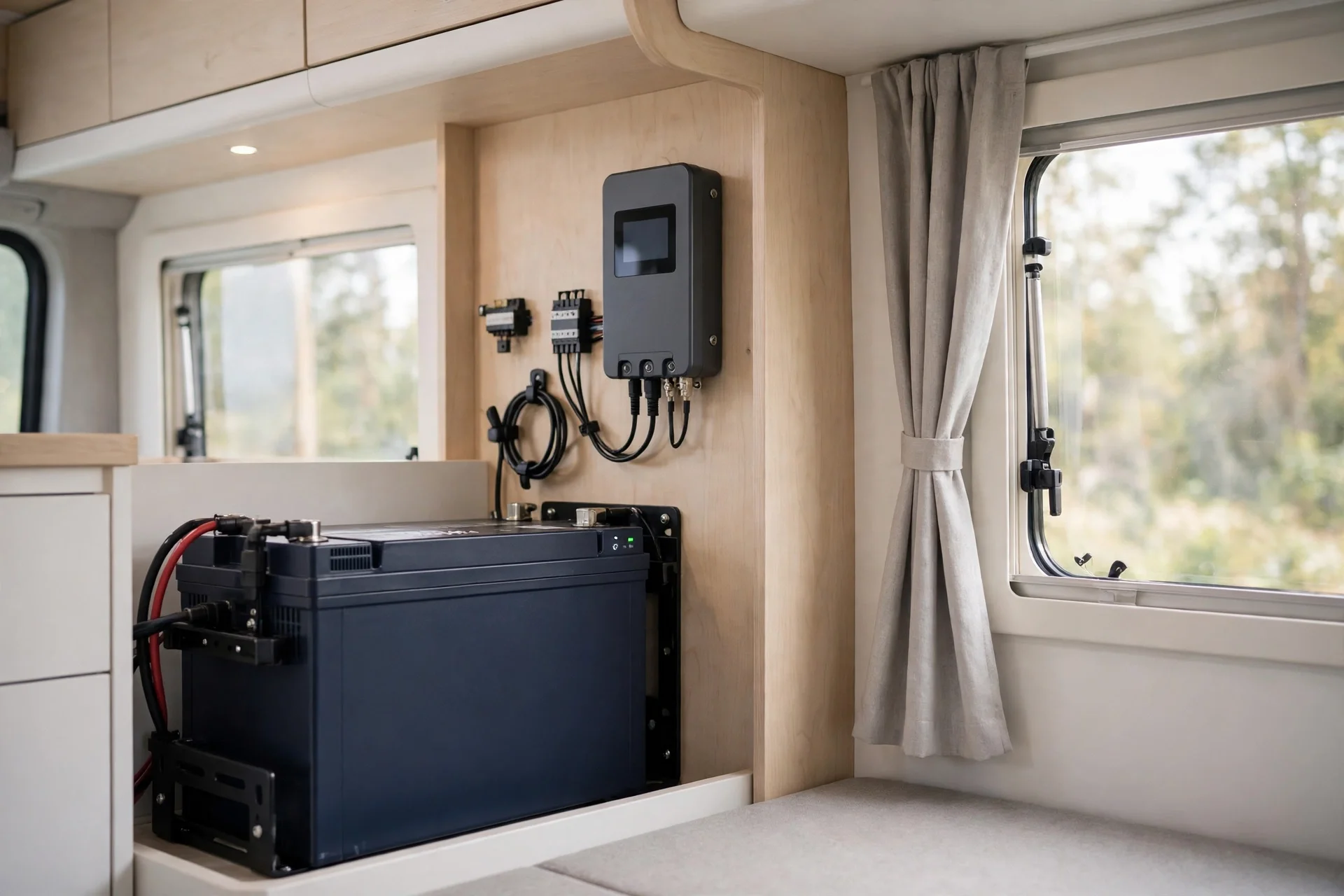
Illustrative scene: a deep cycle battery in mobile use. The image shows the product type, not one specific model.
The upgrade, side by side
| What changes | Lead-acid, in practice | LiFePO4 deep cycle |
|---|---|---|
| Usable energy | Often kept above 50% discharge to protect life | Can usually discharge much deeper, often 80% or more |
| Service life | Often only a few hundred deep cycles | Often thousands of cycles with strong capacity retention |
| Weight and space | Heavy and bulky for the energy stored | Lighter and more compact, a real advantage in RVs and boats |
| Daily protection | Needs careful charging and maintenance | Built-in BMS guards against overcharge, over-discharge, short circuits, and temperature problems |
Why usable capacity matters more than size
Two batteries can share the same rated size and still give you very different nights. If one must stay above half charge to last, a large part of its energy is effectively off limits. A LiFePO4 battery that can be discharged deeper lets a solar system use more of what it generated during the day, instead of leaving that energy locked away.
LiFePO4, or lithium iron phosphate, is also known for high thermal stability. Compared with some other lithium chemistries, it is highly resistant to overheating and thermal runaway, which is why it is widely used for daily residential, RV, marine, and backup storage.
Before you swap: three checks
- System voltage and fit: match the new battery to your existing system and available space.
- Charger settings: confirm your charger and inverter settings suit LiFePO4. Do not assume a lead-acid profile is ideal.
- Real loads: list what the battery must run, and for how long, before choosing a size.
Questions, answered briefly
Will it really last longer? In regular deep-cycle use, yes, in general: longer cycle life and less frequent replacement are the main economic case for the upgrade.
Is it safer to live with? LiFePO4 chemistry and a built-in BMS together give a much stronger safety margin than an unprotected lead-acid bank, but installation and settings still matter.
Is it also cleaner? LiFePO4 batteries contain no lead or acid, need less maintenance, and last longer, so less battery waste is created over time.