

Lead vs LiFePO4, Side by Side: The Limitations That Decide the Real Cost
Lead-acid batteries have been used for decades because they are affordable and widely available. That does not make them the best choice for every job today. When you put their limitations side by side with LiFePO4, the decision becomes less about price on day one and more about what you live with for years.
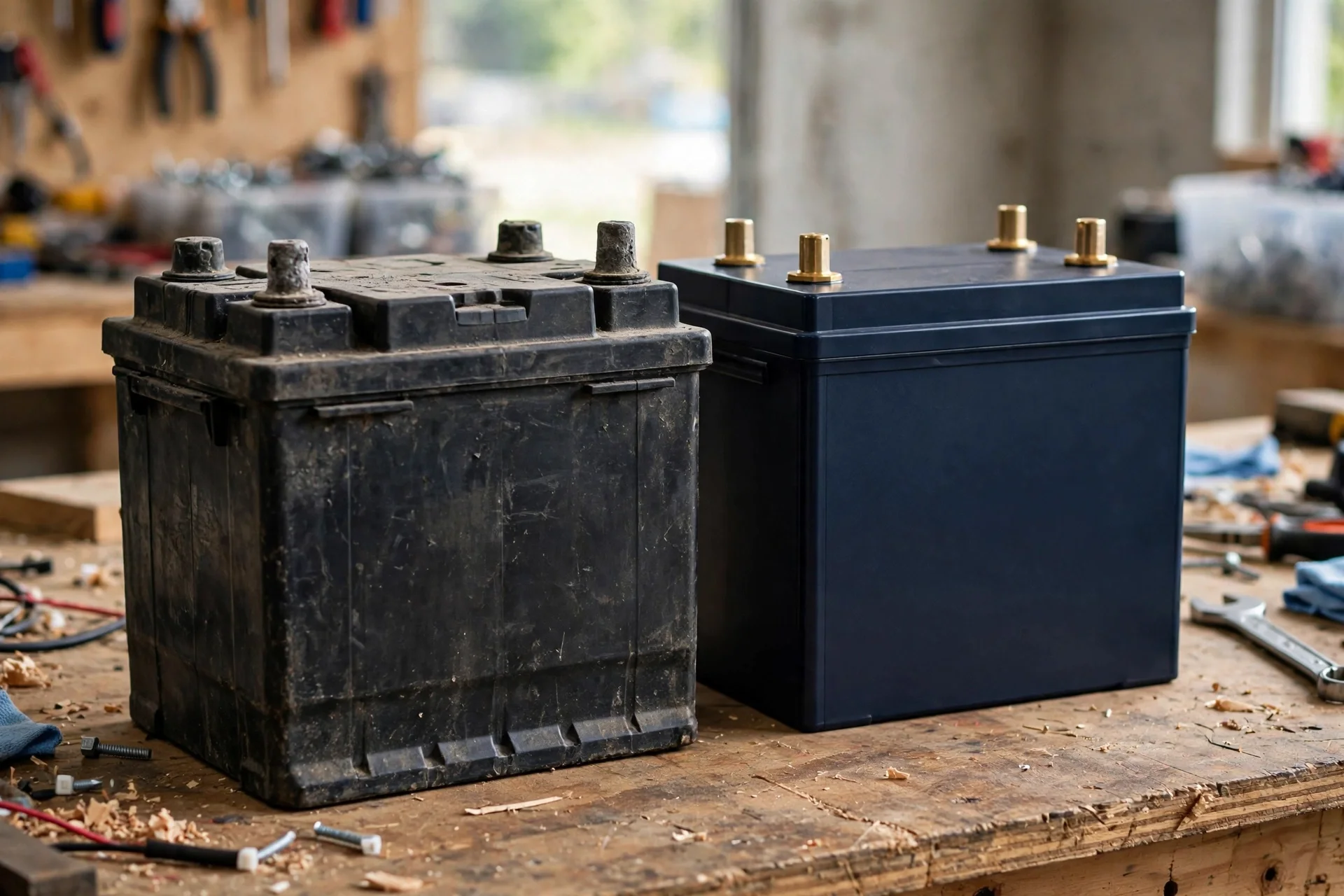
Illustrative scene: old and new battery types side by side. The image shows the product types, not specific models.
Lead-acid limitations, in plain terms
| Aspect | Lead-acid | LiFePO4 |
|---|---|---|
| Usable capacity | Often only about 50% to avoid deep-discharge damage | Usually much deeper, often 80% or more |
| Cycle life | Often only a few hundred cycles | Often thousands of cycles |
| Weight and maintenance | Heavy, more maintenance, slow charging | Much lighter, low maintenance, faster charging |
Safety, weight, and solar fit
Safety is also an important reason to choose LiFePO4. Lithium iron phosphate chemistry is known for excellent thermal stability and strong resistance to overheating, and many batteries are equipped with a built-in Battery Management System. Weight reduction should not be ignored either: LiFePO4 batteries are much lighter than lead-acid batteries with the same usable energy, especially valuable for RVs, boats, portable systems, and mobile equipment where every kilogram matters.
In renewable energy applications, a LiFePO4 battery works especially well with solar panels and inverters. It can charge quickly during strong sunlight and discharge efficiently at night or during cloudy weather, with low self-discharge helping to preserve stored energy. Overall, replacing lead-acid with LiFePO4 is a smart step toward cleaner, more efficient, and more reliable storage, with superior cycle life, higher usable capacity, lighter weight, faster charging, and enhanced safety.
Questions, answered briefly
Is lead-acid ever still the right choice? It can be, for very low-use, budget-sensitive cases, but for daily cycling the trade-offs usually favor LiFePO4.
Does faster charging damage the battery? Not when charging stays within the battery and charger specifications, which the BMS helps enforce.