
Solar at Day, Power at Night: How a Stacked Battery Fits a Solar Home
Solar panels make power when the sun shines. Homes use most power in the evening. A stacked battery exists to bridge that gap: store the surplus during the day, use it at night, and keep the essentials running when the grid goes out.
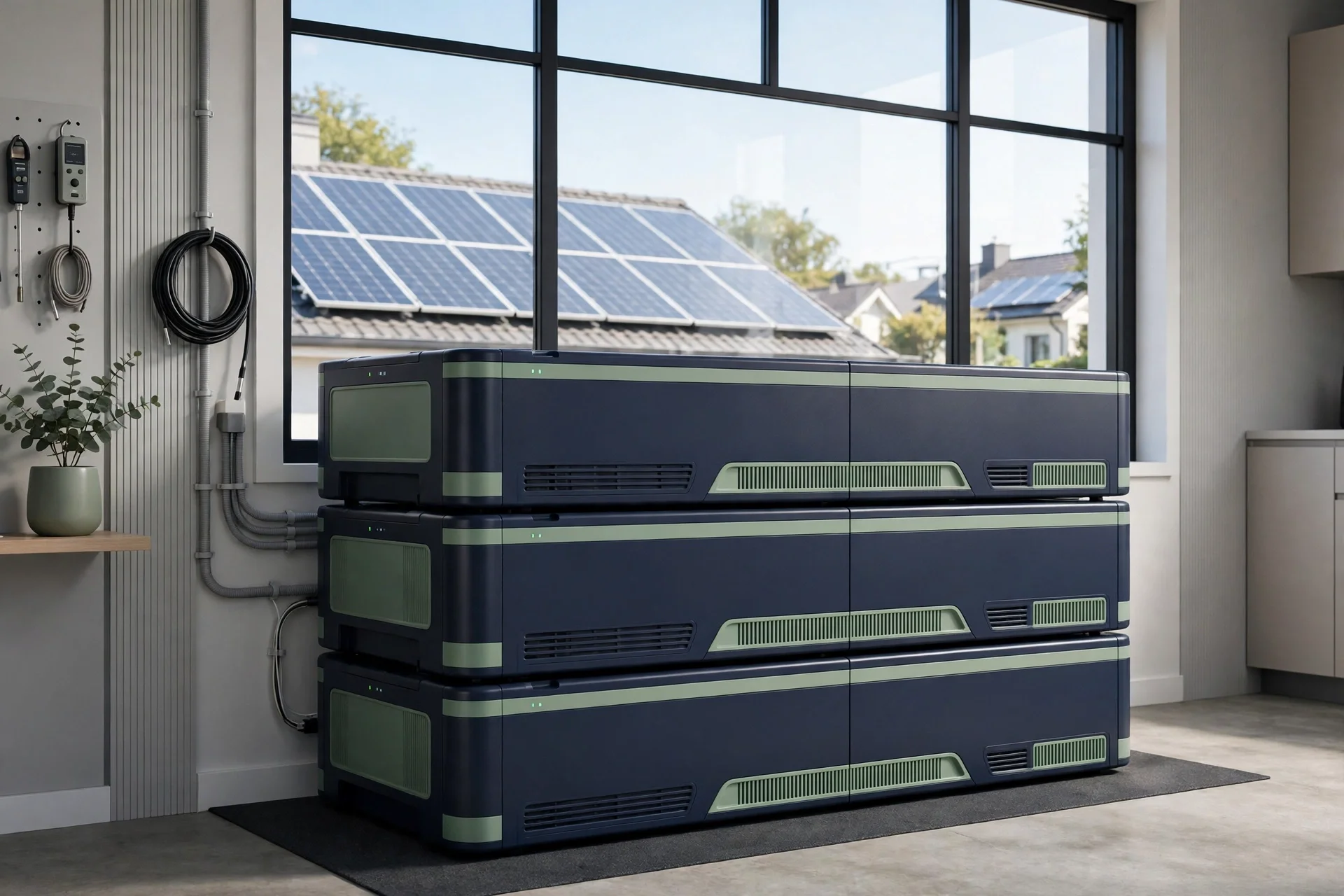
Illustrative scene: stacked storage for a solar home. The image shows the product type, not one specific model.
A normal solar day, with storage
During the day, solar panels often generate more than the home uses. Without storage, that surplus is exported or wasted. With a stacked battery, it is saved for the evening, when lights, cooking, and entertainment push demand up. On cloudy days or during an outage, the stored energy can keep essential devices running: lights, refrigerator, communication equipment, and security systems.
- Daytime: solar charges the home first, then the battery.
- Evening: the battery discharges instead of buying peak-rate grid power.
- Outage: essentials stay on while the grid is down.
Why stacked, not one big box?
A stacked system is made of standardized modules placed one on top of another. That gives three practical advantages. First, it saves floor space and looks cleaner than a sprawling battery bank. Second, installation is simpler, with fewer cables and plug-and-play connections in many systems. Third, and most important, you can start with a few modules and add more as appliances, an EV charger, or a growing household increase demand.
Safety follows the same logic as other modern home storage: most stacked systems use LiFePO4 cells for thermal stability and long life, and a built-in battery management system monitors voltage, current, temperature, and operating status to keep the system stable.
Saving on bills, without overpromising
Storage can reduce bills by using solar or low-cost energy instead of peak-rate grid power, and by increasing how much of your own solar generation you actually consume. How much you save depends on your tariff, your solar size, and your evening use, so no honest article can promise a fixed amount. The safest way to judge it is to compare your daytime surplus with your nighttime demand, then size the battery for that gap.
Questions, answered briefly
How many modules do I need? Start from nightly essentials and evening use, then add modules for comfort loads. You do not need to buy the final system on day one.
Can it work without solar? Yes. It can also store energy during low-cost periods and discharge it during peak demand, though solar is the most common pairing.
What happens in an outage? The battery can supply essential loads, provided it has charge and is installed for backup use. Check backup wiring with your installer.