
Reliable by Design: A LiFePO4 Upgrade for Homes, Businesses and Off-Grid Solar
Solar power is never steady. Clouds pass, seasons change, and peak production rarely lines up with peak use. A reliable battery does not try to change the weather. It smooths it out, storing the surplus when the sun is strong and releasing it when the house actually needs power.
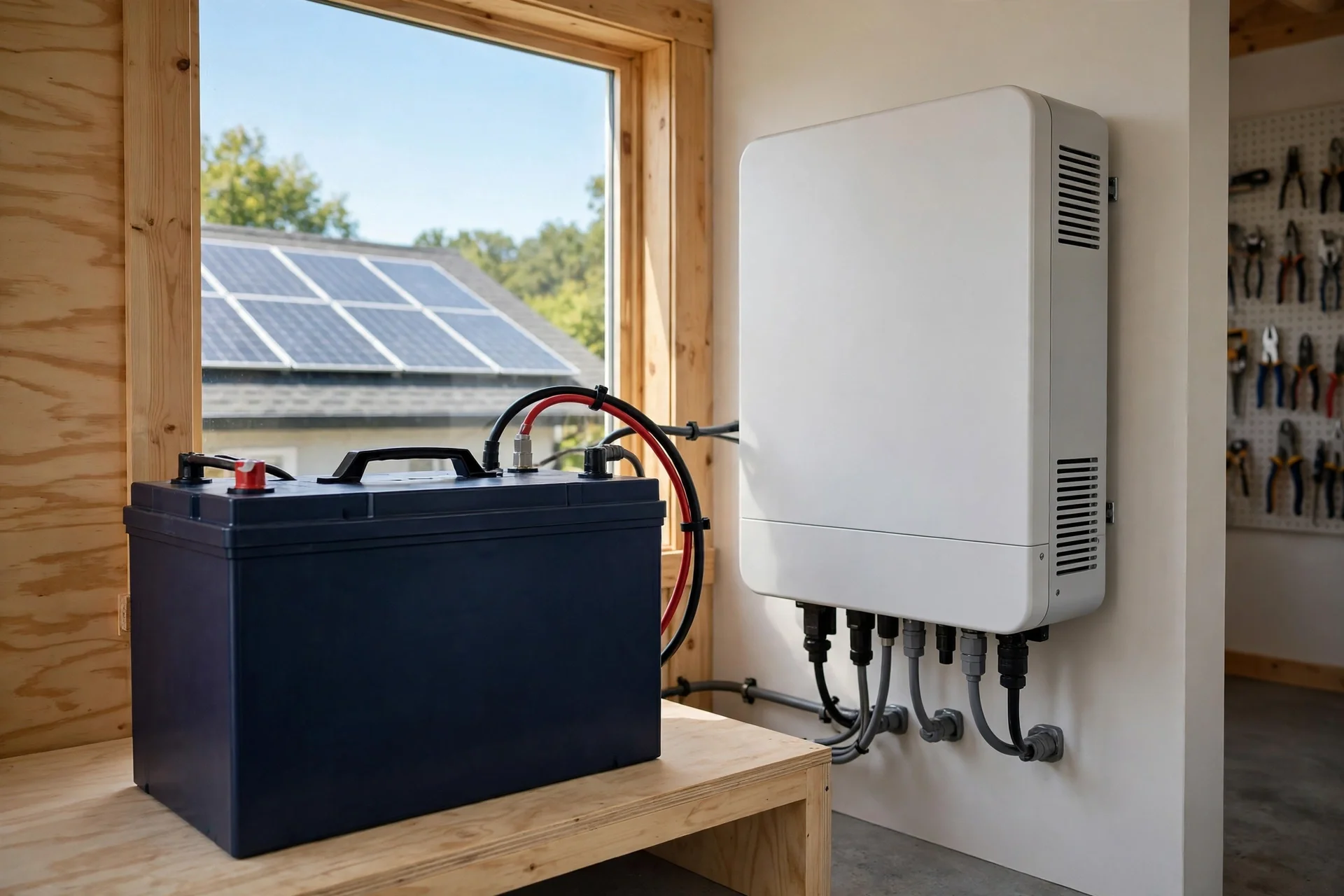
Illustrative scene: a deep cycle battery with solar storage. The image shows the product type, not one specific model.
A longer life, used more fully
One of the biggest advantages of a LiFePO4 Deep Cycle Battery is its exceptional lifespan. While conventional lead-acid batteries often need replacement after a few hundred cycles, lithium iron phosphate batteries can usually deliver thousands of charge and discharge cycles. That longer life also means fewer replacements, less waste, and a more predictable cost over time.
Usable capacity adds to that value. Lead-acid batteries are commonly limited to about 50% depth of discharge to prevent damage and shorten aging. A LiFePO4 battery can safely provide a much higher depth of discharge, often up to 80% or more, so the same rated size delivers more usable energy each cycle.
Safe, light, and easy to live with
Safety is a key reason LiFePO4 technology is widely trusted. Lithium iron phosphate chemistry is more thermally stable than many other lithium battery types, offering excellent resistance to overheating, combustion, and thermal runaway when properly managed. Most high-quality batteries also include a built-in Battery Management System for protection.
For solar systems, that reliability is especially valuable, because generation varies with weather, sunlight intensity, and seasons. A dependable battery stores excess power during peak production and releases it later. Compared with lead-acid, LiFePO4 batteries are also lighter and more compact, ideal for RVs, boats, camping power systems, and portable energy stations. Maintenance is another difference: lead-acid may require regular inspection, ventilation, and careful charging management, while LiFePO4 is generally maintenance-free, cleaner to use, and more convenient for everyday life.
Questions, answered briefly
Is it suitable for off-grid use? Yes, in general, with sizing matched to daily loads and solar production. Off-grid users should also plan for several cloudy days, not just one sunny day.
Does maintenance-free mean I can ignore it? No. It means less routine work, but connections, charging settings, and storage conditions still deserve occasional checks.