

Old Battery Out, New Battery In: A Lead-Acid Replacement That Pays Back in Daily Use
The photo tells the upgrade story in one glance: the old battery on the left is heavy, worn, and tired. The new one on the right is clean, compact, and ready for daily work. Replacing lead-acid with LiFePO4 is not just a chemistry swap. It changes what you get from every charge, how often you replace the battery, and what the system costs over its whole life.
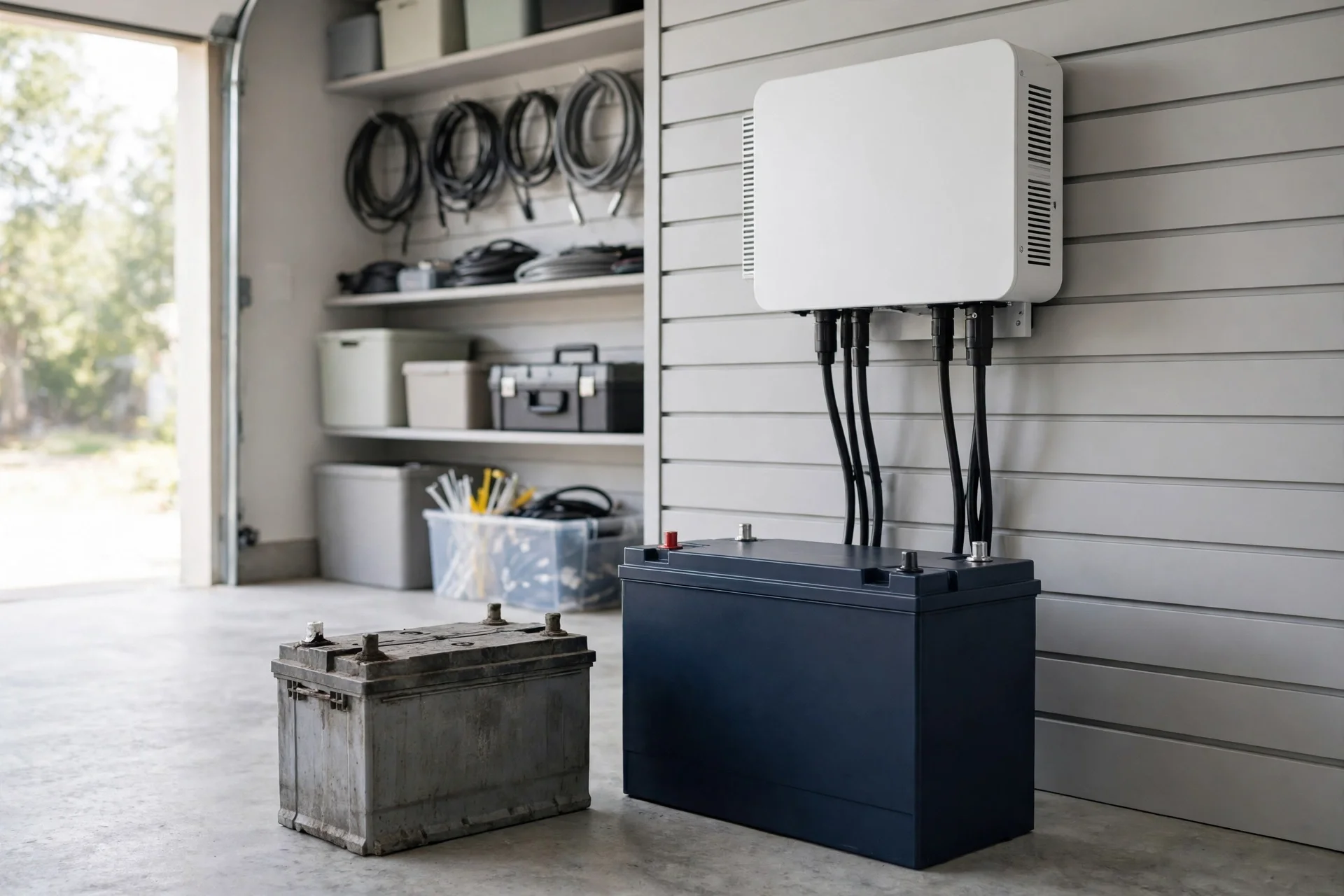
Illustrative scene: an old lead-acid battery beside its LiFePO4 replacement. The image shows the product type, not one specific model.
What you gain on day one
First, usable capacity. Lead-acid batteries are usually recommended to discharge only about 50% of their rated capacity, to avoid damage and a short life. LiFePO4 batteries can safely use a much higher share, often 80% or more. In practice, a lithium battery of the same rated size gives you noticeably more energy each night.
Second, weight and efficiency. LiFePO4 batteries are significantly lighter than lead-acid, which matters in RVs, boats, portable systems, and any installation where someone has to lift, fit, and maintain the unit. They also lose less energy during charging and discharging, and can charge faster, so solar panels, generators, and grid power are used more effectively.
Where the money actually goes
Yes, the purchase price of LiFePO4 is usually higher. The total cost picture looks different. A common lead-acid battery may provide only a few hundred cycles when deeply discharged regularly, while a high-quality LiFePO4 deep cycle battery can often achieve thousands of cycles while keeping strong capacity. Fewer replacements, less maintenance, faster charging, and more usable energy per cycle are what make the lifetime cost lower, not the price on the box.
A built-in Battery Management System adds to that value. It protects against overcharging, over-discharging, overheating, short circuits, and excessive current, and helps extend battery life. For users who are not battery experts, that protection is part of the product, not an extra to remember.
A swap checklist, by use
- Homes and off-grid: list nightly loads first, then choose usable capacity, not just rated capacity.
- RVs and boats: check weight, fit, and ventilation, and confirm charger settings suit LiFePO4.
- Businesses and backup: check what must keep running, and for how long, before sizing the replacement.
Questions, answered briefly
Is LiFePO4 always the right replacement? For most deep-cycle, solar, RV, marine, and backup uses, yes, in general. The exceptions are mainly about system compatibility and budget timing, which should be checked with your installer or supplier.
Will I need a new charger? Often the charger settings need to be confirmed for LiFePO4. Do not assume a lead-acid charging profile is ideal.