
A Practical Upgrade, Not a Gamble: LiFePO4 Deep Cycle Batteries Done Properly
Replacing a battery is rarely about one feature. It is about a practical upgrade that has to work every day: higher efficiency, longer service, more usable energy, less weight, and safety you do not have to think about. When those pieces line up, the change stops feeling like a gamble and starts feeling like maintenance done properly.
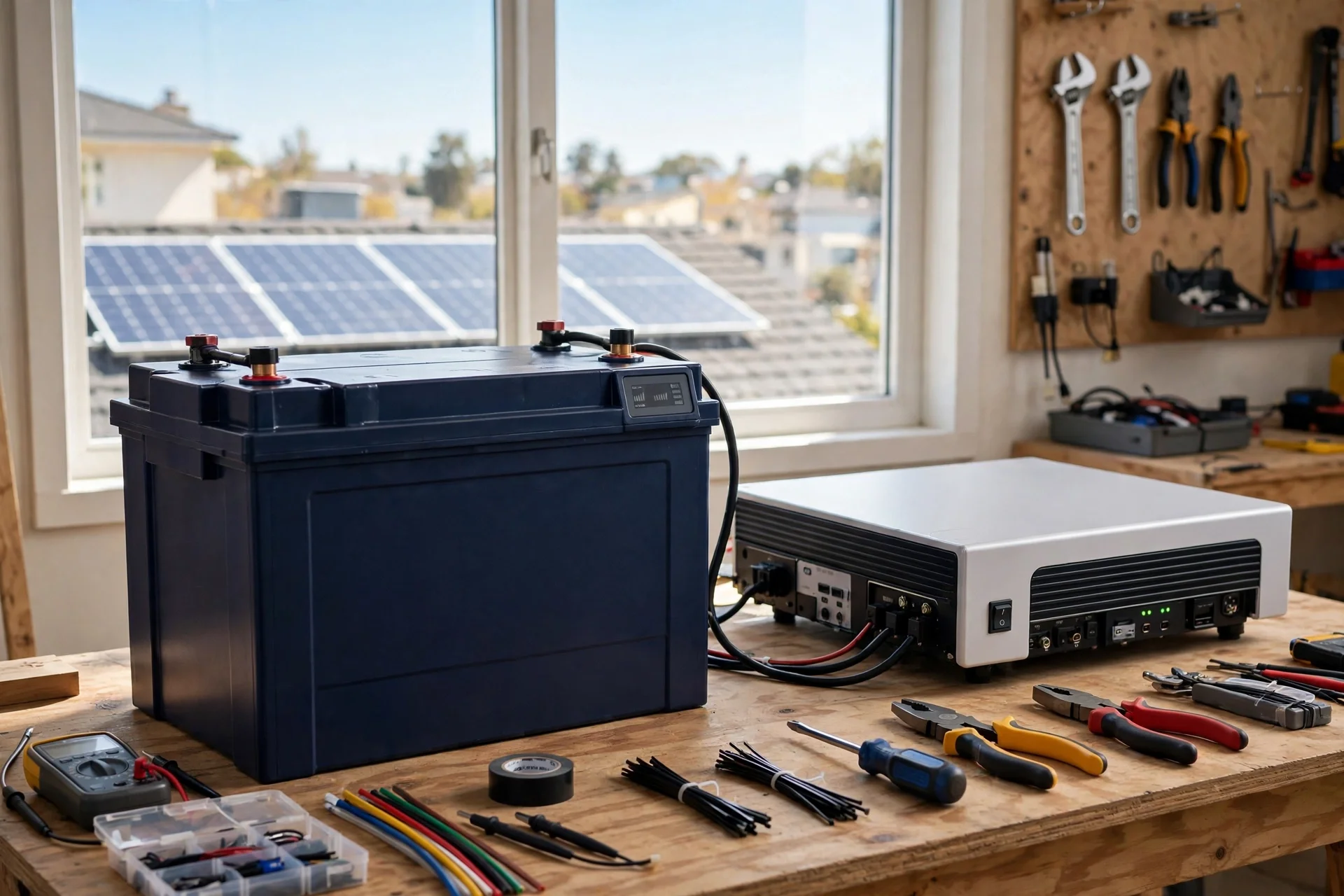
Illustrative scene: a deep cycle battery with a solar inverter. The image shows the product type, not one specific model.
Chemistry that holds up under deep use
A LiFePO4 deep cycle battery uses lithium iron phosphate chemistry, known for excellent thermal stability and long cycle life. Unlike lead-acid batteries, which often suffer reduced performance after repeated deep discharges, LiFePO4 batteries are designed to handle deep cycling well. That stability is the foundation for everything else: longer service, steadier output, and less worry about degradation.
Usable capacity is one of the biggest practical gains. A lead-acid battery is generally recommended to discharge only about 50% of its total capacity to avoid damage and shortened lifespan. A LiFePO4 battery can usually discharge much deeper, often 80% or more, giving more usable energy from a similar size.
Lighter, safer, cheaper over time
Weight matters, especially in mobile applications such as RVs, boats, and portable power systems. Lead-acid batteries are heavy and difficult to move. LiFePO4 batteries are much lighter, making installation easier and improving energy efficiency in mobile environments. Safety follows the chemistry: lithium iron phosphate has a more stable structure and is less likely to overheat, and most modern batteries also include a built-in Battery Management System.
Although the initial purchase price may be higher, total cost over time is often lower, because LiFePO4 batteries last much longer and require little maintenance, saving money on replacements, labor, and downtime. In renewable energy systems, that combination matters even more: solar generation depends on efficient storage, and a battery with high cycle life and fast charging capability can greatly improve system performance, whether in a home solar setup or an off-grid installation.
Questions, answered briefly
Is the upgrade only for solar homes? No. Homes, businesses, off-grid users, RVs, and boats all benefit, with sizing matched to their loads.
Will I save money immediately? Not necessarily on day one. The saving usually comes from longer life, less maintenance, and more usable energy over years.