
Continuous, Not Occasional: Why Deep Cycle Means Long, Repeated Discharge
Upgrading from lead-acid to LiFePO4 is not simply a change in chemistry. It is a change in how you use energy: from short bursts and shallow use to continuous energy over a long period, from frequent replacements to a battery that can be cycled again and again.
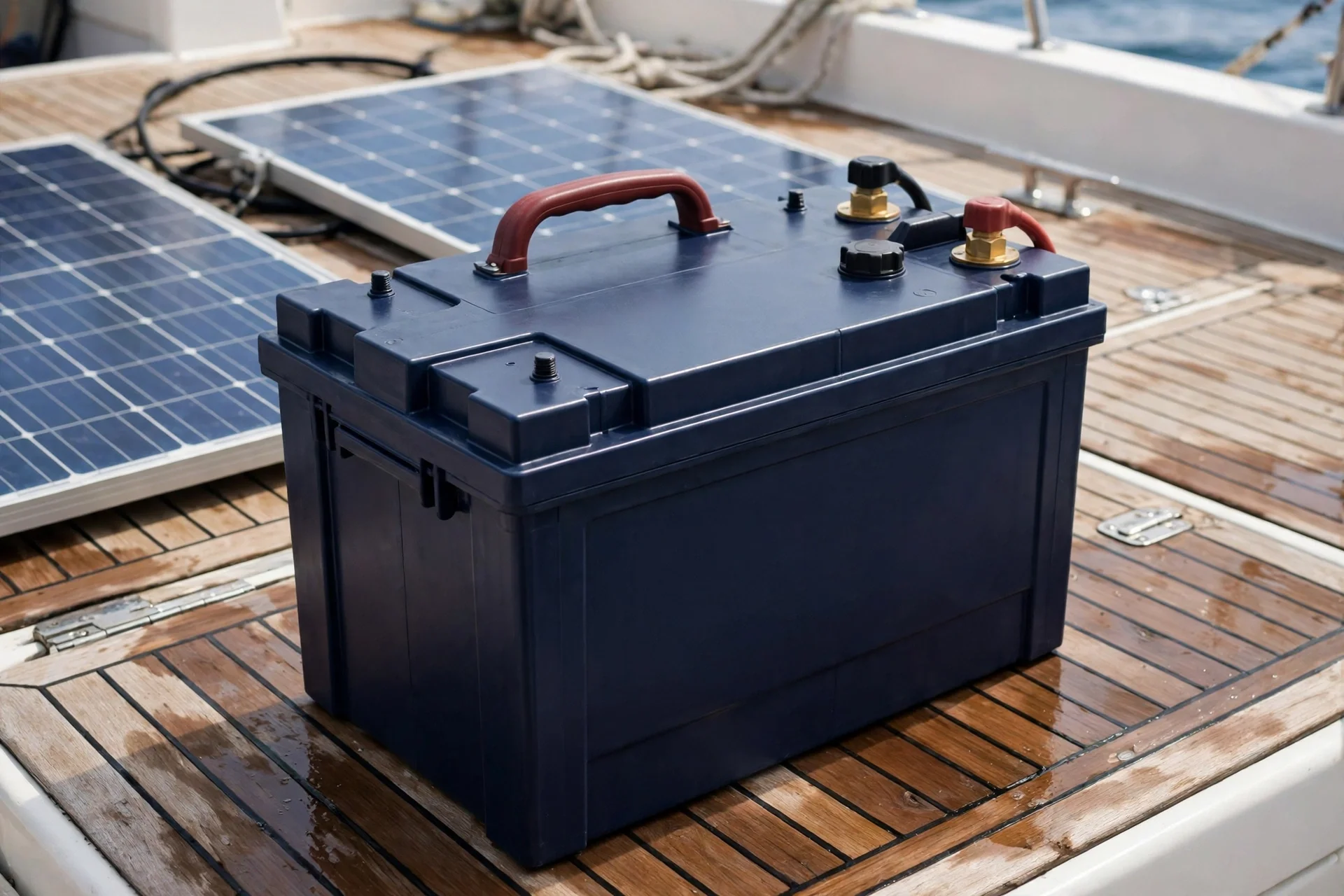
Illustrative scene: a deep cycle battery on a boat deck. The image shows the product type, not one specific model.
Built for continuous energy, not short bursts
A LiFePO4 Deep Cycle Battery, also known as a lithium iron phosphate battery, is designed to provide stable power over repeated charge and discharge cycles. Unlike ordinary starter batteries, deep cycle batteries are built to deliver continuous energy for a long period, making them suitable for homes, businesses, RVs, marine systems, and off-grid power projects where power must last, not just start.
One of the biggest advantages is longer lifespan. A typical lead-acid battery may last only a few hundred cycles, especially if frequently deeply discharged. In contrast, a high-quality LiFePO4 battery can provide thousands of cycles, with proper use and management, meaning fewer replacements and more dependable service over years.
More usable capacity, less weight, faster charging
Another important benefit is usable capacity. Lead-acid batteries are usually not recommended to be discharged too deeply, because doing so can shorten their life, and users often can only use around 50% of rated capacity safely. LiFePO4 batteries, however, can usually be discharged much deeper, often 80% or more, giving more usable energy from a similar size.
Weight is also a key factor. Lead-acid batteries are heavy and difficult to install or move, while a LiFePO4 battery is much lighter, often weighing about half as much as a comparable lead-acid battery, a major advantage for RVs, boats, mobile power stations, and portable systems. Safety is another reason LiFePO4 chemistry is widely respected: compared with some other lithium types, lithium iron phosphate offers excellent thermal stability and a lower risk of overheating, with most modern batteries also including a built-in Battery Management System. Charging performance is also improved, with faster and more efficient charging especially valuable in solar systems where daylight hours are limited, allowing the battery to store more energy during available sunlight. Although initial purchase price may be higher, long-term cost is often lower, because it lasts longer, requires less maintenance, provides more usable capacity, and performs more efficiently. In conclusion, upgrading to LiFePO4 is a smart decision for anyone seeking dependable, clean, and efficient energy storage.
Questions, answered briefly
Can I use a starter battery as a deep cycle battery? Not well. Starter batteries are built for short, high-current bursts, not for long, repeated discharge, and will degrade faster in deep cycle use.
Does faster charging require a special charger? Yes. Use a charger compatible with LiFePO4 chemistry and the battery's specifications.