
A Smarter Upgrade in Performance, Not Just Chemistry
As energy storage technology continues to advance, many homeowners, businesses, and industrial users are replacing traditional lead-acid batteries with LiFePO4 deep cycle batteries. This upgrade is not only a change in battery chemistry, but also a major improvement in performance, especially where daily cycling is the norm.
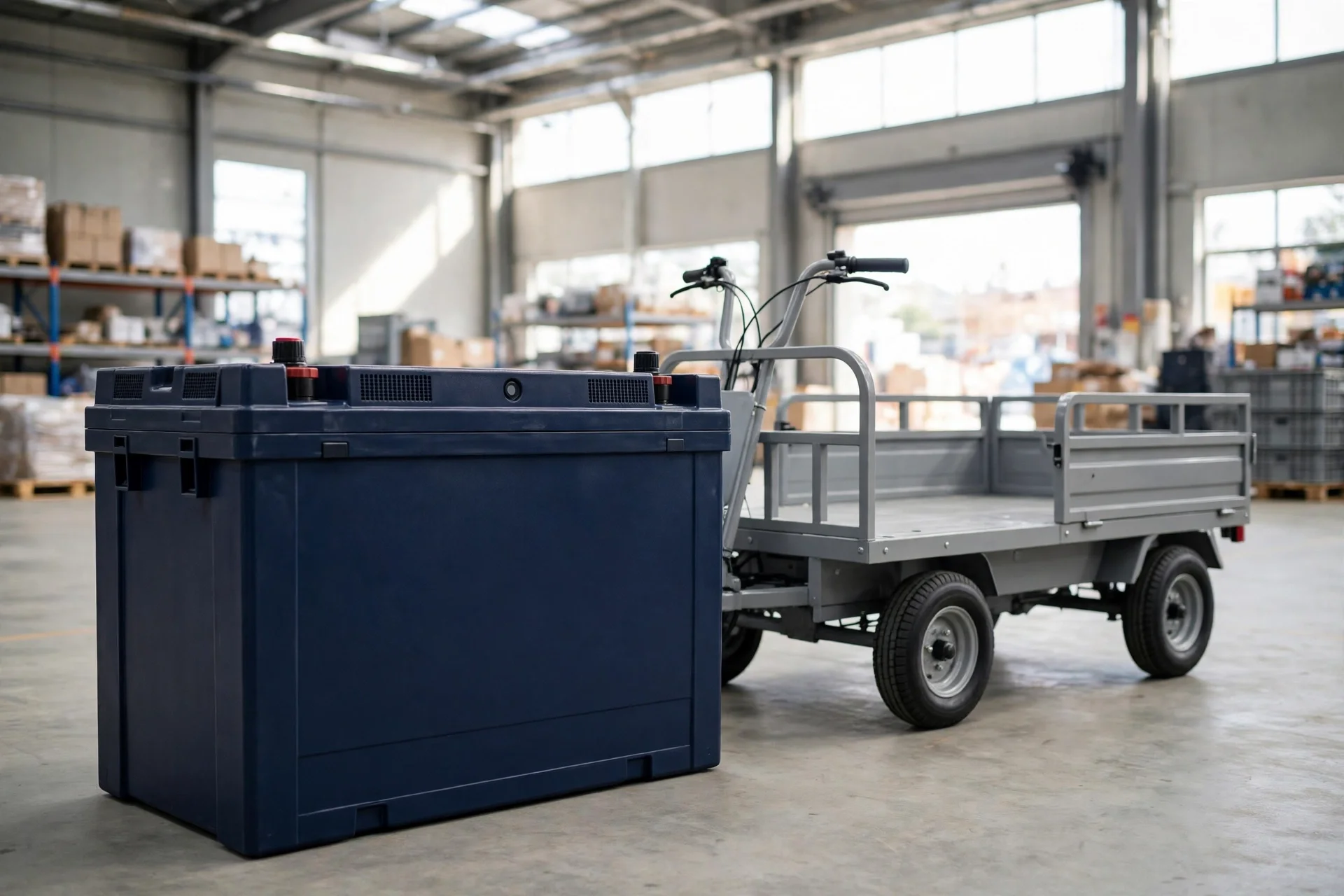
Illustrative scene: a deep cycle battery beside an electric cart in a warehouse. The image shows the product type, not one specific model.
Stable power over long periods, much longer life
A LiFePO4 deep cycle battery, also known as a lithium iron phosphate battery, is designed to deliver stable power over long periods and withstand repeated charge and discharge cycles. Compared with lead-acid batteries, it offers a much longer service life: a typical lead-acid battery may last only a few hundred cycles, especially when deeply discharged regularly, while a high-quality LiFePO4 battery can often provide thousands of cycles under proper operating conditions.
One of the most important advantages is usable capacity. Lead-acid batteries are usually recommended to be discharged only to about 50% of rated capacity to avoid damage and shortened life. LiFePO4 deep cycle batteries can often be discharged much deeper, often 80% or more, giving more usable energy from a similar size, which matters most when evening loads must be covered from stored solar energy.
Lighter, safer, and especially strong in solar use
Weight is another key benefit. LiFePO4 batteries are significantly lighter than lead-acid batteries with similar usable energy. For mobile applications such as RVs, boats, electric carts, and portable power systems, reducing weight improves efficiency, convenience, and performance, and simplifies handling and installation.
Safety is also a major reason LiFePO4 batteries are widely accepted. Lithium iron phosphate chemistry is known for excellent thermal and chemical stability, and is less prone to overheating compared with some other lithium battery types, with most modern batteries also including a Battery Management System for protection. In renewable energy systems, LiFePO4 batteries perform especially well: solar power generation often depends on daily charging and discharging, which requires a battery that can handle frequent cycling, and LiFePO4 batteries charge faster and store energy more efficiently. Although lead-acid batteries are still used in many traditional systems, the advantages of LiFePO4 are difficult to ignore: longer lifespan, higher efficiency, lower weight, deeper discharge capability, and improved safety all contribute to better value over time. As energy needs grow and clean power becomes more important, LiFePO4 deep cycle batteries will continue to play a vital role in dependable energy storage, representing a powerful balance of durability, safety, and performance for today's demanding applications.
Questions, answered briefly
Why does daily cycling matter so much for solar? Because solar storage is charged and discharged almost every day, so cycle life and efficiency compound quickly, unlike occasional backup use.
Is the upgrade worth it for traditional systems? Often yes, if the system cycles daily or needs deeper discharge, but sizing and charger compatibility should be checked first.